Sunday, March 23, 2008

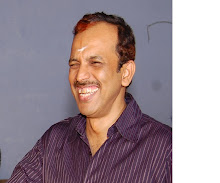
Swamy Ramsukhdas- Rishi Extraordinary


Swamy Ramsukhdas- The great Gita Exponent


In my mid thirties, I started my exciting spiritual journey through a copy of Bhagavdad Gita published by ‘Gita Press’,(in Tamil, called Tattva Vivechani) which cost me Rs 50 in 2000. The original was written by Poojya Jayadayal Goendka.

The commentary was so beautiful, I continued to read it one sloka a day, memorizing it and contemplating on that sloka’s purport. This is called ‘Parayana’ in Sanskrit. I did two full rounds with this commentary (which means 700 slokas read in two rounds) and it took me almost six years. Even though I had two other commentaries of Gita by Swamy Chidbhavananda and Srila Prabhupada, I used ‘Tattva Vivechani exclusively.

It was in 2006 that I chanced upon another commentary of Bhagavad Gita in a book fair at the Gita Press book stall. It was called ‘Sadhak Sanjeevani’ by Swamy Ramsukhdas. This was in two big volumes. For my third round of parayana, I started using this.

Swamy Ramsukhdas surprised me with his handling of each sloka. Slowly it was dawning on my not so quick mind that I was studying the words of one of the greatest saints of this century. The commentary was extraordinary and so was the Tamil translation.

As I entered the second chapter, the explanations simply amazed me. Swamiji’s words hit me with such force, I was awe-struck and was eagerly awaiting the next sloka. Now I am in the sixth Adhyaya (chapter) called Dhyana Yoga (or Atma Samyama Yoga) and enjoying each step.

What I am realizing now is that Swamy is no ordinary word to word commentator with linguistic or literary brilliance. He was a realized master who lived the Gita and he was giving his own experiences in words. For example his explanation on ‘kriya, karma and karma yoga’ is unique and to be found nowhere.

About a year back I wanted to meet him and surrender to him . I enquired at ‘Gita Press’ at Gorakhpur through phone. What they told me was shattering! Swamiji had attained Samadhi in Rishikesh in 2004. I asked if they had a photo of him. The answer was another surprise. Poojya Ramsukhdas ji never allowed himself to be photographed in his life span of 103 years !

Gita Press , I heard always was operating under the sage advices of Poojya Swamiji. Gita Press is, in my opinion, a sterling example of how dedicated work by a few Hindus can effect a change in the whole society. They have always produced great books, neatly printed and given to the public at subsidised prices. They print in many languages of India, and have established branches all over India. As Hindus, we should make it a habit to patronize this holy institution.


Our Sanatana Dharma (Hinduism) has seen many great saints and masters in its glorious history. Swamy Ramsukhdas ji is undoubtedly among them. Together with his spiritual depth, he knew the problems faced by Bharat. He was a very vocal advocate of Hindu unity.

He condemned abortions and contraception terming them acts against nature. He experienced agonizing pains on hearing cow slaughter. Swamiji reminded his countrymen that here is the only race sworn to protect the cows, and in our very midst, cows are feasted by people of other religions !

Swamy was so concerned about the dwindling Hindu population. He has warned that if Dharma should stand in the world, Hindus must maintain a significant population.

Swamiji continues to be the inspiration behind my spiritual activities on the ground and on the net. I request my brethren all over the world to study the word of a great , great Rishi of our times.

Jai Bharat, Jai Sanatana Dharma !

Venkat


Wednesday, March 19, 2008

What do Kriya, Karma and Karma Yoga mean ?


Kriya, Karma and Karmayoga

When one thinks of the words of Kriya, Karma and Karma Yoga one immediately thinks of Bhagavad Gita only. Nowhere does one find Karma Yoga so thoroughly analysed and explained as in the Gita. Any student of Sanatana Dharma (Hinduism) will want to know the real meaning of these terms.

Before proceeding we need to know about the Prakruti or nature. Prakruti is defined as the combination of Kriya and Jata (or matter). These both have a beginning and an end. For example, the changes that happen in our bodies are kriyas . The material body is the matter.

What is Karma ? Karma happens when there is an ‘ownership’ to a Kriya. In a person’s life many kriyas are continuously happening. But, the moment that person feels that they are his deeds, ‘Karma’ is born. Here the ‘person’ is the ‘Chetana- the Self’ who is the very source who illumines the body (which is made up of Kriya and matter).

River Ganga flows on her own and irrigates the land wherever she goes. This flow is a ‘Kriya’. Whether she destroys are irrigates, there is no Papa (sin) or Punya attached to its flow.

A person’s body grows from childhood to Youth and untimately to old age. This process is a ‘Kriya’. But when he thinks that ‘he’ is getting old and changing, that moment a ‘Karma’ is born. Karma is the marriage of the Self and the Kriya. To put it simply, the ‘I’ feeling in a ‘Kriya’ leads to a Karma. This is called the eternal bondage of the Self and Nature.


The Ahankara or ‘I- feeling’ is the source of all bondage. Because of this bondage , man forgot the real immense power inside him and came to identify himself with his body (and mind and intellect) which are a part of the nature. 'yagnyArthat karmano(a)nyatra loko(a)yam karma bandhana:' ( Gita 3-9)


In this context, how shall we define Yoga ? Well, yoga is that process that strives to release the self from its bondage to the nature.

When this process is focused on the actions going on in this world and helps man to get a release from these actions, it is called as karma Yoga. Karma is bondage. Yoga is release. Karma is centred on this world. Yoga is centred on 'Self' or God.


Krishna says that man can never be without doing Karma (Gita 3-5). Even when he thinks he is idle and still. His body is changing per second, his mind is rushing into every possible direction. His intellect is also continuously analysing every thought. The wise distances these kriyas as that of the nature. He has realized that his real 'Self' is untouched by these kriyas.


But , is there a message in all this for a common man ? There is. Only as long as the 'I' feeling remains in oneself, he will be bound to the world. The way to release from this is simple. First, he has divert all his karmas towards the welfare of the world at large. This is the first step. Here, the 'I' feeling is blunted. This leads to real Karmayoga. Karmayoga in turn destroys the bondage of the Self -' yagnyAcharata: karma samagram pravileeyate' (Gita 4-23). And finally the man realizes his eternal relation with ParamAtman.

Karma yoga is one of the four Royal paths of realization as expounded in the Gita. Karma Yoga is a speciality of Sanatana Dharma and every modern Management exponent finds in it the ideal tool for defining work and result.

Karma Yoga affirms emphatically that man has no right over the fruits of his actions. It is only in working that he has the right. This is being confirmed by almost every management guru now. Stephen R Covey, (of 7 habits of highly successful prople) writes this : " There is nothing such as success and failure, There are only results".

Krishna goes further saying that the 'I' feeling and the resultant expectation of the outcome of karma is what binds man to the world more and more. The only way out , therefore, is doing your duty regardless of the outcome. Even better, do it for others' sake. Still better, dedicate the whole work in the feet of the Lord.

Bhagavad Gita Blog

Articles on Our Hoary Vedic and Agamic tradition

Bhagavad Gita study group


Monday, March 10, 2008

Why communism is incompatible with Sanatana Dharma ?


Why communism is incompatible with Hinduism ?
As a small boy, when I started reading newspapers, I was struck by the force and hatred of the communist leaders when they wrote about Sanatana Dharma (read Hinduism) and its practices. During college years, when I stopped to listen the road corner meetings, I started to realize that this is a definite pattern. The young person I was, I was trying to figure out why these speakers, almost all of them Hindus, were spewing such venom on my Dharma.

Not till I wrote my blog post on Truth , I realized the truth behind communism and their hatred. Now, let me share my perception of the 'How' and 'why' of their hatred.

The distilled wisdom of the Upanishads, Shastras and the Gita is that, this world, as we see it, is transient and really has no existence. I am now repeating some of what I wrote in my earlier blog for clarity. (between the lines )
++++++++++++++++++++++++++++++++++++++++++++++++++++++++++++++++++++++++++++++
In Bhagavad Gita , Sri Krishna says, (2nd chapter ,16th sloka)

nAsato vidyate bhAvo , nAbhAvo vidyate sata: |
ubhayorapi drushtontas tvanayos tattvadarshibhi: ||

"That which is untrue has no existence. The truth has no non existence. The conclusion about these two has been visualized by the knowers of truth."

Now, view the statement about truth vis a vis the above sloka. It says That the untruth has no existence! The material objects belong to the prakruti or nature. The nature is an ever changing entity. The human body and it five sheaths is also a part of nature and it is subject to birth and death.

In fact the changes in the body is so fast and persistent that it changes by the second, nay even millisecond so much so that the body you saw before closing your eyes is not the same when you opened your eyes. If you observe closely, you will realize that the body was not there when one was not born nor it will remain when one dies. The body travels from non existence to non existence. And ,the untruth has no existence. What else can one call the body and its extension , the nature ,except as an untruth ? All the theisms calling the body and this world real are untrue!
+++++++++++++++++++++++++++++++++++++++++++++++++++++++++++++++++++++++++++++++++

Now , let us analyze the fundamentals of the communist doctrine. Communism is founded on the premise that ALL HUMANS are created EQUAL and it is one man's wickedness which is suppressing others. Communism also declares that the material world is true and pooh poohs all claims on the soul.

You would now know what the Sanatana Dharmic concept on the above is. According to my Dharma, every creation is unique. There is no similarity or EQUALITY either. Each organism, whether a worm, or a bird, or a man, is born according to eternal laws of karma based fully on the previous embodied birth of its self or soul or spirit.

I think this conclusion in our scriptures of 'NO EQUALITY " is bothering the comrades and they , for this very reason, are making fun of our scriptures and our saints. This statement is the one that shakes their very foundation. But these ignoramuses are forgetting the fact that communism is just an economic concept with no real grasp over life, creation or the creator. They simply focussed on material which is a transient entity which travels from non existence to non existence.

And these men based their doctrine on such a shallow concept (not even a philosophy). It made man an automaton and taught that a scientist is equal to a sweeper and the Wrestler is equal to the frail. And, horror of horrors, it justified emptying one pocket to fill another.

They could not explain why different children born to the same mother were unlike each other and did not fare equally in life. For them the material, the eternal untruth, was the truth. This is the reason why communism was chased out of Europe. According to even a modest estimate, nearly 4 million people lost their lives directly during communist rule in Europe and Russia. China is till limping with communism because they compromised on 90 % of their values !

Sanatana Dharma really does not need these foolish concepts since we had an advanced society based on Dharma and referenced by the Shastras.

But why Communism is soft on Christianity ?

On the other hand, one also wonders why the communists are soft on Christianity and even bends over backwards to accommodate it. The reason is Christianity of today shares some of Communist ideals. They both deny the supremacy of the soul over body, and believe existence is supreme. After all, Communism is the brainchild of Christians only !


In the north east states of India, where Christianity was allowed unlimited access to evangelize an innocent tribe population, it was the communists who were the beneficiaries by capturing the assembly seats. The collusion continues to this day. When Ramakrishna Math wanted to start schools in those states, they found that all the existing schools taught only upto 5 th standard to deliberately keep the population undereducated. Such is the typical Communist- Christian fears on Knowledge! If the knowledge empowered the converts, then these colluders will have nowhere to go!

Kerala is also a classic example where the communists and Christians are made for each other.

Now, you realize why the senile communist comrades hit out at all Hindu groups and Saints ? The growth of Sanatana Dharma is their death. Once the knowledge of the indestructibility and Eternality of the embodied Self reaches the common man, he will know that the purpose of life is Self realization and not self denial and self oblivion. At that point, the rout of the communism will be complete. The average communist will rue another precious birth wasted by his useless doctrine.

http://sanatanavenkat.blogspot.com
http://bharataagamas.blogspot.com
http://groups.yahoo.com/group/gita_dharshan (Gita study group)


Wednesday, February 20, 2008

TRUTH ALONE SHALL PREVAIL

THE TRUTH ABOUT TRUTHS


Satyameva Jayate- Truth Alone Shall Prevail. So declares Mundakopanishad. These words are on our national emblem. They affirm that truth alone will prevail. Is it a mere declaration or a spiritual truth ? Let us analyze here.

What is truth ?
We should define Satyam before proceeding further.
Truth is a statement regarding existence. We cannot make a statement on non existent objects. Then it becomes an untruth.

Gita on Truth

In Bhagavad Gita , Sri Krishna says, (2nd chapter ,16th sloka)

nAsato vidyate bhAvo , nAbhAvo vidyate sata: |
ubhayorapi drushtontas tvanayos tattvadarshibhi: ||

"That which is untrue has no existence. The truth has no non existence. The conclusion about these two has been visualized by the knowers of truth."

Now, view the statement about truth vis a vis the above sloka. It says That the untruth has no existence! The material objects belong to the prakruti or nature. The nature is an ever changing entity. The human body and it five sheaths is also a part of nature and it is subject to birth and death.

In fact the changes in the body is so fast and persistent that it changes by the second, nay even millisecond so much so that the body you saw before closing your eyes is not the same when you opened your eyes. If you observe closely, you will realize that the body was not there when one was not born nor it will remain when one dies. The body travels from non existence to non existence. And ,the untruth has no existence. What else can one call the body and its extension , the nature except as an untruth ? All the theisms calling the body real are untrue!

Then , what is the true one ? That which exists always. What is that ? It is that which does not die when the body withers and that which is not born when a body is born. It is what we call as Atman (soul or spirit in English) . The atman, is never born , never dies, and it is changeless and eternal. It occupies all matter both living and non living.It is equally true for a human , an animal, a plant and the inanimate. In short , it is for all those which are subject to change. Atman is the absolute, and the material universe exists in relation to it.

Now, let us come to statements about truth. The statement on the law of change, for example , is always true since it reflects an eternal law. Same for the laws of motion, Gravity, Relativity etc.

The discoverers of Truth
Sanatana Dharma ( Hinduism) is a collection of theisms that focus on truths, the eternal truths. The only ancient society that discovered what remained changeless when everything was changing. The processes were subjective and objective enquiries. The Rishis , who founded Sanatana Dharma were rare beings who choose seclusion and introspection instead of wealth and pleasure.

As the pleasure objects were born and dying, so were the pleasures that were associated with them also were changing from birth to death. In short, they also travelled from non existence to non existence! So our Rishis wanted to hold on to the truth- the unchanging one. And they ended up finding the changeless, the birthless, deathless , ever blissful , omnipotent, omnipresent and omniscient – The Atman.
And they thundered to the whole world
“ I have known that God, who shines like like the sun transcending the darkness; it is by knowing Him alone that you can conquer death, there is no other way” – svetasvara Upanishad- 3/8

And they roared
“ hear, ye children of the deathless” (svetasvara Upanishad- 2/5)

The messengers of Untruth

So we know what are TRUTHS. We have been subject to an endless barrage of evangelists pouring untruths about creation and the creator. Apply their statements to the touchstones of Vedic wisdom and the hollowness of their statements stands out. Their concepts are the Untruth since they do not accept the Atman, the changeless. Instead, they glorify the human body, and even promise heaven with this body!


Such is their fear of death that their philosophy is afraid to talk even about it. They forget that they are preaching in a land that produced illustrious sons who found ways to conquer death and transcend birth and death. These missionaries fear death and glorify the body.

Vedas declare that death is only a transition and this knowledge is the Truth. The body is an instrument for realizing the truth.

Vedas- the fountains of Truth

Swamy Vivekananda- above

Our rishis explored the ‘Untruths’ also. They found that the untruth has no existence without the truth. Truth is the other side of Untruth. They have such a complimentary existence. Between the untruth and Truth, there exist various shades of truth. Swamy Vivekananda, the acetic extraordinaire of the last century declared “Man travels not from falsehood to Truth; But from Truth to Truth; from a lower truth to a Higher Truth”

The thought that ‘the body is a man’ is the absence of truth. The thought that ‘ the man is eternal and the body is not’ is the Highest Truth. Vedas, The scriptures of Sanatana Dharma, speak only the truth. Those that negate it have chosen the path of untruth.

Is it any wonder that the “Truth Alone Shall Prevail” ? It is a profoundly scientific, and spiritually satisfying statement.

‘Satyameva Jayate’


Friday, February 15, 2008

PRANA OR LIFE FORCE


THE FORCE OF LIFE


Lots of scriptures of Sanatana Dharma ( Hinduism) talk about Prana (or Vital Force). You may ask, what is special in it ? Many other books also talk about it. Many medical philosophers also talked about it. What’s so special about Hindu scriptures talking about Prana ?

The answer is : Hindu scriptures were the earliest to discuss this topic. We can even say that the source of all other writings about Prana are the Hindu scriptures.

Works of Sanatana Dharma talk about Prana in a complete holistic manner while the derived works used it for some specific purpose. For example the Chinese system discusses it for medical purposes. Homeopathy , perhaps was the first western system that developed a healing doctrine based on the life force.

So , what is prana ? We shall see here.

What is Prana ?

Prana is a general term used to denote the life force or Vital force in Man. The discovery of Prana dates back to the Upanishadic times, which is before Bhagavad Gita period, which places it to before more than five thousand years. It is discussed in the Mundakopanishad(3-1-9). The Gita also mentions the five pranas.

The Upanishadic masters found out that the prana is in fact flowing inside the body in the form of “Vayu” (air currents). Their further discovery was that there were slight variations in it and they sub divided Prana into ten. They are

  1. prAna
  2. apAna
  3. samAna
  4. udhAna
  5. vyAna

The above five are the first five principal pranas. The below five are the next set.

  1. nAga
  2. krukara
  3. kUrma
  4. devadatta
  5. dhananjaya

Srila PrabhupAda, founder Acharya of Iskcon, writes thus on these ten Pranas as they are manifest in the human body.

“...The movements of the body are first generated from the heart, and all the activities of the body are made possible by the senses, powered by the ten kinds of air within the body. The ten kinds of air are described as follows: The main air passing through the nose in breathing is called prana. The air which passes through the rectum as evacuated bodily air is called apana. The air which adjusts the foodstuff within the stomach and which sometimes sounds as belching is called samana. The air which passes through the throat and the stoppage of which constitutes suffocation is called the udana air. And the total air which circulates throughout the entire body is called the vyana air. Subtler than these five airs, there are others also. That which facilitates the opening of the eyes, mouth, etc., is called naga air. The air which increases appetite is called krukara air. The air which helps contraction is called kurma air. The air which helps relaxation by opening the mouth wide (in yawning) is called devadatta air, and the air which helps sustenance is called dhananjaya air.

All these airs are generated from the center of the heart, which is one only.”

Cosmic equivalents of Five Pranas:

The further discovery of the Vedic seers is that the first five pranas have their cosmic equivalents. Prasna Upanishad ( Atharva Veda) says (3.8)

“the sun is the reservoir of the cosmic light or Prana. He rises helping the microcosmic Prana to see objects. The goddess who presides over the Earth (Bhumi) is the cosmic Apana and she helps man by attracting the downwards the apana of the person. The space which is between the Earth and the Sun (antariksa) is the cosmic Samana, (and it helps the Samana inside man). The atmosphere or Vayu is cosmic Vyana (and helps the Vyana inside man).”
Attributes of Prana as a whole:

Prana or life force is part of ‘apara’ meaning the relative part of creation. The ‘para’ being the absolute. This can be explained in this way : When the very life or the ‘Atman’ leaves the body, the prana inside withers. Prana does not leave the body. Except the Atman, the rest form part of Prakriti, the nature.

Nature is the combination five elements controlled by the three Gunas (attributes – Sattva, Rajas and Tamas) and is subject to change. The vital force also is subject to change as it is strong in youth and weak in old age. Prana inside a living being is not renewable. A person with a sound prana is healthy and vice versa.

The prana counterpart of other living beings and also the cosmic prana can affect the individual prana. Thus disease spread from one to another. A diseased prana extends its sick aura to another. Conversely, the aura of a healthy or superior Prana affects a weakened one and rejuvenate it . That is how the healing methods like Reiki, Pranic healing etc become possible. The cosmic prana also can influence the individual prana. See how winds, rains, sun rays affect one’s health.

The Hatha Yoga and Pranayama are excellent routines in stabilizing and strengthening one’s Prana. Try doing pranayama late in the night. You will be wide awake in bed that night. This is the result of excess prana which made you fresh.

Where is Prana ?

There will still be a question about the possible location of prana. Given its air current like nature, can you pinpoint its location. Well, the Vedic seers answered that too. They found that the human body is made up of five sheaths. They are

a. The outermost is the Annamaya kosa , symbolizing the material body.

b. The second inner one is Pranamaya kosa , symbolizing the sheath of vital force or prana.

c. The third inner one is Manomaya kosa, symbolizing the sheath of the thoughts, the mana

d. The fouth inner one is the Vignyana maya kosa, symbolizing, the sheath of the intellect

e. The fifth and innermost is the Ananda maya kosa, symbolizing the sheath of Bliss.

Sickness, exists from the physical sheath to the mental level affecting the respective layers individually or collectively. It was Samuel Hahnemann, the founder of Homeopathy, who first pointed out the mental and psychical aspects of diseases. In other words , he found out that many purely physical diseases like a flu, a constipation or even cancer had an accompanying mental symptom showing the depth of the affection.

Medical aspect of Prana:

Ayurveda , Siddha, Unani , Traditional Chinese Medicine and Homeopathy are the primary systems that recognized Prana and have treatments accordingly. Homeopathy, though a western system, is 100 % based on the fundamental tenet that “ when a person is sick, it is his Vital force that is deranged”. (http://www.homeopathyhome.com/reference/organon/organon.html). In 1790, it was a revolutionary concept in Europe and the materialistic Allopathic school has been critical of them from then onwards. It continues even now and more vigorously.

The land that is Bharat

A typical Brahmin , when preparing to eat, says many mantras, for purification of the food and himself. Before eating , he tells , ‘prAnAya svAhA, apAnAya svAhA, samAnAya svAhA, udhAnAya svAhA, vyAnAya svAhA’ each time partaking a miniscule quantity of food and placing it deep in the tongue and swallowing it. I always wondered at the significance of this procedure. This procedure is as old as Hinduism itself. Roughly more than five thousand years !

Coming to the Brahmin’s eating ways, is it any wonder that the Brahmin remembers and honours the five fundamental pranas before eating ? Not only this, every ritual, even after some corruption over the millennia, still signify great scientific and spiritual temper. After all, they are from the land that is Bharat, that is the cradle of the greatest civilization the world has seen.

http://sanatanavenkat.blogspot.com
http://bharataagamas.blogspot.com
http://groups.yahoo.com/group/gita_dharshan
(Gita study group)


Thursday, January 17, 2008

Hinduism and Icon worship


Hinduism and Icon worship


Think Hinduism (sanatana dharma) and the first mental image will be the temples and the icons inside. Ganesha, Shiva, Krishna , Kali, Muruga, the list is endless.

The icon worshippers are ridiculed by many , notably the Christians and Muslims, and also by some sects of Hindus themselves. Is this form of worship disgraceful or is it inferior to other methods ? We will see here.


Pooja(Worship) and the ‘Icon’
The terms ‘icon’ and ‘worship’ go hand in hand. They have such a complementary existence that it in is inconceivable to think one without the other. The terrain on which they both stand is ‘devotion’- Bhakti.
Right from Rig-Veda, we see hymns in praise of Ganapathy, Vishnu, Shiva, Sarasvathi, Lakshmi etc. The devotion or Bhakti element of Hinduism is continuing from then to now. Krishna gave a name to it as ‘Bhakti Yoga’ in Srimad Bhagavad Gita and placed it at par with Dhyana, Jnana, and Karma yogas , the other three royal paths of realization.


Bhakti – the love of the Ultimate
It was Bhakti that necessitated worship and worship needed icons. Bhakti is an expression of love to the absolute Brahman. Logic tells us that only a form can be loved. Brahman is beyond all forms , expressions and at the same time is the very embodiment of forms and expressions. So Bhakti needed and created forms. 

In the Bhakti tradition of Sanatana Dharma( Hinduism), worship occupies a prime place. So what ? any other religion does that, some may ask. Look closely. The Hindu, in his daily pooja (worship), carefully decorates the picture or statue of his deity with flowers and clothes , shows perfumes, lights agarbathies, lamps, performs arathi , all the while singing in praise of the deity.
In all this what we see is an expression of unconditional love, an attitude of Honouring the Supreme and total surrender to Him. Bhakti here, is both the means to an end and the end in itself. The end point in the royal path of Bhakti Yoga is realization of the Lord and union with him , and He will grant him release from all bondages, both positive and negative. Swamy Vivekananda says, consummate Gnana automatically reaches the Bhakta who has reached such a state.

The Sanatana Dharma acharyas like Narada and Sandilya refined Bhakti to such an extent that even sutras- meaning formulas were written for the practitioner. An unquantifiable parameter finally was defined and the limits between stages of the practitioners were expounded, and the end stage was clearly shown. 

Hindu ‘Pooja’ versus Semitic ‘Prayer’

Compare our pooja to the mere prayers of other religions. Either they are mere acts of begging God for various earthly and heavenly things which are not eternal. Godhead is beyond everything heavenly and earthly. A Hindu seeks union with Him. He does not want to be a mere possessor of his creations such as heaven, paradise etc. nor does he despise the various hells which are also God’s creations.
I have seen the Christians dressed in their best proudly going to the Church. The Hindu, humility personified, flowers in hand as offering to the Lord , goes to the temple and prostrates surrendering totally. 

Viewed in the above context , one can visualize what an icon symbolizes to a Hindu. It is not an ‘idol’ as a Muslim thinks or a ‘pagan’ symbol as a Christian thinks. These ‘idols’, as per the semitic religions , are forms depicting various smaller Gods or God like beings capable of giving some limited benefits. 

For example, the Catholics despised Sun worship of the European natives since they worshipped Sun for what it represented. In other words , Sun was worshipped as Sun. Naturally it contradicted with Jesus’s teachings that the Father in Heaven created the sun and the earth. So a created object cannot be worshipped. So the creator God, the Holy Father was worshipped by the Catholics.

The Hindus also worship the Sun, but in what way ? Here is a mantra , (hymn) which is chanted every day at sunrise and sunset.

nama: savitre jagadeka chakshuse jagat prasuti sthiti nAsa hetave |
trayee mayAya trigunAtma darine virinji nAraya sankarAtmane ||

“Obeisances to you Lord Sun, who has your eyes every where in the universe, who creates, maintains and destroys the universe, who is the embodiment of the three Vedas, who is also an embodiment of the three Gunas (of Satva, Rajas and Tamas) , who is differently seen as Brahma , Vishnu and Shiva.”

The Sun here , has the attributes of the Supreme , Absolute Brahman. All the Christian and Muslim clerics misunderstood the subtlety and depth of Hinduism here for mere ‘idol’ worship. What ignorance ! Gaznavi, in his hatred against idols, is known to have destroyed thousands of temples including Somnath. Had he and his mullahs understood Vigraha Aradhana of Hindus, such a colossal loss would have been averted. 

In another angle, the religions where the Iconic worship was practiced, were more peaceful than the religions that preached against it. The crusaders and Jihadis would have eliminated more than 20 millions of people in the name of God. No love, No Bhakti, No wisdom.
In essence, whatever the form, the attitude is what is to be seen. In every Hindu ‘Iconic’ worship, they are worshipped as the ‘Supreme Brahman’. The proviso always has to be ‘worshipped as’. So, there is no problem in worshipping a mere stone. The Hindu sees the supreme God in that stone ! 

Various Icons of Sanatana Dharma
The icons were established according to the six religions of Sanatana Dharma. The Shanmathas as they were popularly called, each offered forms or Icons or Vigrahas or Prathimas to the practitioner of the respective religion.
The six Sanatanic religions were
  1. Souram- which worships Lord Sun as the supreme Brahman
  2. Ganapathyam- Which worships Ganesha as the Ultimate Brahman
  3. Koumaram- which worships Lord Muruga or Skanda as the Brahman
  4. Shaivam- Where Lord Shiva is worshipped as the supreme Brahman
  5. Vaishnavam- Where Lord Vishnu and his incarnations are worshipped as the Supreme Brahman.
  6. Saktam- Where the Mother like Female deity of Kali or Durga or Amba or Amman is worshipped as the supreme Brahman.
Sanatana Dharma is not a religion per se but a conglomerate of six major religions each with separate Agamas for rituals, worship and Dhyana and Gnana. The first three religions have got assimilated into the latter three religions now. Each of these religion has its own Deities. Sometimes these deities are coded like the Linga , basically representing more of the formless or Nataraja, the cosmic dancer. 

So, to conclude Icon worship is a valid and satisfying spiritual truth. Next time you hear Mulla Omar or some self conceited western missionary declare something silly, be armed with facts to raise your head and thunder.

References- Bhakti Yoga by Swamy Vivekananda- Ramakrishna Mutt, Chennai
Kadavulin vadivangal( Tamil)- Swamy Chidbhavananda, Ramakrishna tapovanam
Thirupparaithurai.

Sunday, December 30, 2007

The theory of Macrocosm and microcosm

According to Einstein, the sum total of all energies in the universe at any point of time is the same. Which means that , existence as it is , is subject to no change. Which means that creation is not time bound. This also satisfies law of conservation of energy (derived from Newton's laws of motion) that energy can neither be created nor destroyed.

Our vedanta says there was never a time when there was no creation. One of our Shanti mantras which is the invocation mantra of Esavasya Upanishad says

Om purnamada purnamidam purnat purnamudasyate
purnasya purnamadaya purnamevavasishyate

my translation
om ada:- that ; purnam- (is) infinite; idam- this; purnam- (is) infinite; purnat- (from) the infinite; purnam- the infinite; udasyate- emerges; purnasya- from the infinite; purnamadaya- even when the infinite emerges, purnam eva- only the infinite ; avasisyate- remains

translation according to Advaita Ashrama publication

my translation-
Om that (supreme Brahman) is infinite, and this (conditioned Brahman) is infinite. The infinite (conditioned Brahman) proceeds from the infinite (supreme Brahman), (Then through knowledge), realizing the infinitude of the infinite( conditioned Brahman), it remains as the infinite (unconditioned Brahman) alone.

From the translation of Mata Amritananadamayi's site, amritapuri.org

"That is the Whole, this is the Whole;
From the Whole, the Whole arises;
Taking away the Whole from the Whole,
The Whole alone remains…

More of the mantra

The "pUrNamada: pUrNamidam..." vajasaneyi samhitopanishad mantra (chapter 40 of Madhyandina branch and chapter 41 of Kanva branch of Shukla yajurveda; popular under the name of Ishopanishad or Ishavasyopanishad) has a precedent as well as a parallel in Atharva veda.

Now, my question: Is it not a clear, very very clear understanding of the cosmic laws ? This sloka says that the Brahman and the creation never change. There is no time factor at the level of Brahman at all. Time is relative. Brahman and creation are absolute.

And we give the credit to Einstein.


Organic farming and the centrality of the cow

Jai Sri Ram.

ORGANIC FARMING AND THE CENTRALITY OF THE COW

These days you hear a lot about organic farming. It can be defined as the entire process of agriculture in a given area done exclusively with natural manure and natural pesticides. (and on the other hand completely eliminating syntheric fertilizers and pesticides).

India was a world leader (and we still are) in the area of organic farming. Our forefathers knew how to take record harvests using bio manure using cow dung . The pesticide they used was pancha kavya- which is a mix of cow's milk , cow's ghee, curd, cow dung, and cow's urine.

Coming to think of it , the cow was the centre point of agriculture. No wonder , it was a respected animal in India. The entire economy of rural India depended on cattle and farming. Without a cow, no family was complete. A man's wealth was measured by the number of cows he had.

In addition to manure, the cow's milk was a much sought after food. Butter milk was (is) a famous health drink and even a poorest man prepares it and takes regularly.

The cow is the most docile of all animals known to man. It is man's friend, wealth and spiritual companion. All great yogis, after having reached a stage when they could reflect on their past lives, found to their astonishment that , a recent birth of them was in the form of a cow !

But, how do we treat them? Old cows , after the milch period is over, are sold to moslems who take them in open trucks for days without food and water ! All the cattle farmers in India are Hindus and all the butchers are muslims. Will our mother nature forgive us ? How can any Hindu go to a Krishna temple when his pet animal is butchered in his own land ?

How can a person go to Shiva temple, when the bull , his vehicle, is killed mercilessly after all its strength is sapped out in farming and cart pulling ? Do we not see in suburbs of cities, the neck and legs of cows are joined with a rope so that the cow cannot raise its head more than one foot above the ground ? The owner replies that this prevents the cow to 'focus' on the grass and prevents it from straying away !

Will our Gods ever forgive us ? Think ! This is the only country that knew to thank the animals. But here , right in our midst, all these chaos are happening.

Self respecting Hindus, awake ! Stop this killing. Even if it is at the cost of some of your savings, buy an old cow, save it, and protect it. If you are a city dweller, allocate some money each month to give it to some goshalas, who are struggling to make the ends meet . There are many good goshalas. In my next post I will give the address of some. Meanwhile members can post on this and add whatever you want to.

Organic farming and the centrality of the cow- part 2
I think this is something everyone need to educated uopn.

60 years back, we were taking only one harvest a year. The rest of the time , the field was rested or 'rejuvenated'.

The issue of plenty has nothing to do with farming methods. Rather with preservation techniques and distribution.

The farmer 60 years back must have been a confused man. He knew neither his own tradition well nor the dangers of the alien methods. A professor in Annamalai University, was explaining in Podhigai channel how he helped get fantastic yields of sugar cane with just cow dung manure as fertiliser and pancha gavya as pesticide. The suffix - 'cide'- meaning-'to kill' is a misnomer here . These natural agents created an atmosphere where the pests cannot thrive.

Similarly, neem paste and turmeric made the bugs sterile by interfering in their reproductive system.

Sri Natesan , organiser of Govardhan, a cow protecting organisation, was telling me that Masaal Dosai with potato smash inside became famous only in the 60 s. Because they could be easily transported from the Nilgiris . But no one bothered that the terrace farming that was a requisite for potato was ruining the western ghats and the source of a number of rivers.

Twenty five years back, if a guest came during noon, he was served only butter milk or rice- but no milk or coffee. Why ? Was milk insufficient ? Nope. India had much more cows then than at present. There was no preservation. The 'pasteurization' was not introduced.

But no one bothered to notice that the pasteurized milk was a dead milk by heating it to 170 deg plus temperature. Initially in America, no cat or dog used to touch the pasteurized milk. My son's bronchial allergy/ cold taking/wheezing was greatly relieved after I started giving him farm fresh milk. You will vomit instantly if you ever enter the storage yards. The globe- container is washed once in many months or not at all.

Nowadays apples are waxed and stored for years. Waxing closes the pores in the outer skin of the apple and prevents the moisture from escaping. Taste a waxed apple and taste a fresh one. You will know.

In essence, If we want our children and their descendants to live healthily, organic farming is essential and cow protection is a topmost priority. Without cow organic farming is inconceivable.

Let us all give our big hands. Cow protection is not only spiritual in nature but profoundly scientific.

Wednesday, December 26, 2007

Temple Archakas Issue- Will sense prevail

Temple Archaka Issue- Will sense prevail ?

Mr M Karunanidhi, CM of Tamilnadu, passed a law recently stating that anyone can become an archaka of any Hindu Temple.

On the surface it looks good and in these times , everyone seem to agree. Most sections of the society believed that at last the only remaining bastion of the brahmin has been stormed. Is that view right ?

There is little awareness among the lay public about the regular brahmin commuity and the Archaka community. The archaka community is broadly divided into Saiva (Sivachariar or Kurukkal) and Vaishnava sects( Bhattars). These archakas swear by the Agamas and not the Vedas. Whereas the brahmins (iyers, smarthas) live by the Vedas and have nothing to do with the kurukkal or their Agamas. By this I do not mean the Agamas are antagonistic to the Vedas. Agamas use many vedic mantras and practices, and they have adapted the Varna system.

The Agamas are the guiding documents of the majority of the non brahmins of Tamilnadu- whether of Saiva, Vaishnava or Saktha hues. As such, the Agamas are theirs ! But, the Agamas are massive Sanskrit documents which are out of bounds to most of the general public. Only the archakas are the authorities in them ! They do a five year Agama course many Patashalas run by Hindu Charitable organisations and mutts.

These archakas are also traditionally proficient in Grantha lipi, a form of letters used by ancient Tamils to write Sanskrit. This is Tamilnadu's own Sanskrit Lipi !

Agamas specifically insist that only those Agama experts belonging to the respective Archaka community MUST BE ALLOWED to enter the sanctum sanctorum of temples. Many may object to this but, temples are tantric complexes and temple worship, deepa, dhoopa, arati, alankara, naivedya , prakara circumambulation all are tantric practices.

Agamic injunctions are therefore subtle( since they are tantric) and no one has ever questioned them. As such , the person allowed as per Agamas should do the puja inside the sanctum.

The Tamilnadu Government's move will be a direct impingement on the Agamas, and the persons affected will be only non brahmins as their own sacred books are trampled ! The athiest TN politicians can ill afford the anger of the caste Hindus in this regard !

Also, all the Agama mantras are in Sanskrit, and have been followed since time immemorial. The Agamas are said to be as old as the Vedas themselves. By promoting Tamil archana, another injunction is disobeyed. Even the Adheenam of Thiruvavaduthurai, which is not a brahmin mutt, recently issued a statement saying only Agamic mantras will ne allowed inside the sanctum and Thevaram and Thiruvasagam can be recited outside. Even Supreme court has heard a case and has specifically stated that only Sanskrit Mantras are to be chanted inside the sanctum !

The Agamas are living, vibrant documents which govern the entire Hindu society right from the Dalit to the Brahmin- whether they acknowledge it or not. Agamas started temple worship and the entire plan upto the consecretion stage is governed by the Agamas only.

The Tamilnadu Givernment, thinking in its stereotyped views that anything spiritual or orthodox is brahmanical , has blindly gone into this matter without weighing the pros and cons. This move , if becomes law, will seriously affect the temple management and future temple constructions. Agamas' superiority will be put to question and all future governments will enact laws with impunity in temple matters. The losers will be the non brahmin Hindus !

The sane option would be to regularize the Agamic education, providing better pays to these archakas and conduct centralised examination with periodic checks - all in concurrence with all the adheenams and mutts. This is a win win formula and the Government will get many bonus points.

Venkat
http://bharataagamas.blogspot.com

Thirunavukkarasar (Appar) and the revival of Hinduism


THIRUNAVUKKARASAR (APPAR) AND THE REVIVAL OF HINDUISM IN TAMILNADU.

Appar swamigal was a spiritual giant of ancient Tamilnadu.( 4 th century AD) Here is the story of his life. He lived in an extraordinarily troubled phase of Hindu religion and let us see how he toppled the politically motivated religious aggression of the Jains and Buddhists.

Appar was born in a Tamil Vellalar family of farmers. His birthplace was Tiruvamur, in central Tamilnadu. Originally named ‘Marul neekkiyar’, he lost his parents at an early age. His sister, Thilakavathiyar, was betrothed to Kalippagaiyar. Before the marriage took place, Kalippagaiyar was killed in battle. Thilakavathiyar refused to marry any other stating that once she thought of someone as life companion , it was final and no other had a place in her life.

Unable to see his sister in sorrow, young Marul neekiyar, drifted away and joined the Jains in Pataliputram (present Kadalur).

He excelled in the study of the scriptures of the Jains and soon was one of their leading scholars. He also got a name from them as ‘Dharmasena’.

His sister, Thilakavathiyar, an astute Shiva devotee, could not bear to see her brother thus gone abandoning the age old Shaiva tradition. She incessantly prayed Lord Shiva for returning her brother to her.

Dharma Sena developed a terrible stomach ache after that. He tried various ways available at that time. His Jain community also tried to cure him by various prayer and healing methods but to no avail. The pains worsened. At this time, he thought his days were numbered and remembered his sister . He went to see her immediately.

His pious sister, knowing her brother's ailment to be Shiva's leela, thanked the Lord in her heart, prayed and took vibhooti ( holy ash) in her hand and applied on her brother's forehead. Instantly, the pains left and Marul Neekkiyar fell on his sister's feet. He realised his mistake and was changed forever.


The Jains could not stomach his leaving their religion.. They had become politically powerful by converting Kings and the nobles. Their complaint to the Pallava King, Mahendra Varma, resulted in Marul Neekkiyar being put into lime kilns. Not only did the ordeal could harm him , but it was like " a faultless Veena, an evening moon, a flowing breeze, the beginning spring, a pond with bee surrounded flowers" as he sang the immortal ' Masil Veenaiyum....'


The Jains now induced the King to order him to be tied to a rock and thrown into the sea. The stone floated and on it sat Thirunavukkarasar ( a name he got later due to his command over the tongue), singing the pathigam ( ten quadruplets) ' Chotrunai Vediyan..'


The King soon realised his grave mistakes and it was Thirunavukkarasar's turn to advise him to take to Shaiva Dharma as his ancestors did.


It was the first blow the Atheistic jains received. Though Thirunavukkarasar was over 50 years when he converted back to Saivism, he went by foot to many Shiva temples in Tamilnadu and sang pathigams on the residing deities. He was joined by the child extraordinaire , Gnana Sambandar to deal deathly blows to Jainism and Buddhism wherever they went. It was Gnana Sambandar who called him as 'Appar' which name stuck.


Appar was a colossus who was a original thinker and was divinity personified. He was arguably the first to start the Bhakthi movement in India that later caught the imagination of the rest of India. His mode of tackling on the alien religions was in fact , very simple. He identified himself with the people, cared for them and helped them.


His life itself was spent in cleaning temples ( called Uzhavarappani in Tamil). But this simple act got him so many followers and his songs ignited the devotional fires among Tamils after many centuries of confusing religious thoughts. Appar advocated simple living, being pious and relying on God Shiva as an ideal supreme God. The miracles he performed on his countrymen was also a factor that steered Tamilnadu away from Jainism.


Appar's songs along with those of Gnana Sambandar and Sundarar form the famous 'Thevaram' , a sacred treasure for Tamil Saivism which are sung to this day by devotees.


LESSONS FOR BHARAT


Appar's life is a lesson for all those working for a revival of Hinduism towards releasing it from the clutches of self defeating, false secularism . Devotion has to be cultivated in every person and self pride in his beliefs has to be encouraged. Every Bharat builder must be a sadhak himself, trying to realise God. He must seek God before he can ask others to do so. To show the bluff in the fake healing of Christians, he himself must try to become a healer.


Every temple, be it in a dalit colony or be it the richest , must evoke the same devotional spirit in every one of us. We all must become Loud Hindus. By loud I mean, we should overcome shyness to sing His fame aloud in the temples. We must become visible Hindus. By visible , I mean proudly adorning our religious symbols like Vibhhoti, Namam, Thiruman, Kumkum etc. and also by rejecting lungi and western dress in temples. Be a Bold Himdu. By bold I mean , never hesitate to question anything that affects our Hindu society.


Do this and see our Sanatana Dharma engulf not only Bharat but the entire earth.


Jai Bharat

Venkat